From podcast to Reels in an afternoon: the pull-quote method
20 June 2026 · 8 min read · The Clipdify team
Key takeaways
- Scan the transcript for pull-quotes instead of scrubbing audio — a 2-hour episode yields 20–30 candidates.
- A clip passes the test if the sentence works with zero context and makes a disputable claim.
- Extract, caption, and schedule in one sitting while your judgment on the episode is fresh.
Podcasters sit on the best short-form source material there is: hours of unscripted, opinionated, quotable conversation. The pull-quote method is how you mine it without re-listening to the whole episode.
Start from the transcript, not the timeline
Scrubbing audio is slow; scanning text is fast. Transcribe the episode, then read the transcript looking for one thing only: sentences that would work as a standalone quote on a slide. Mark every candidate — a 2-hour episode typically yields 20–30.
The pull-quote test
- Does the sentence make sense with zero context?
- Does it make a claim someone could disagree with?
- Would a stranger repeat it to a friend?
Two of three is a clip. Three of three is your pinned post.
Build the clip around the quote
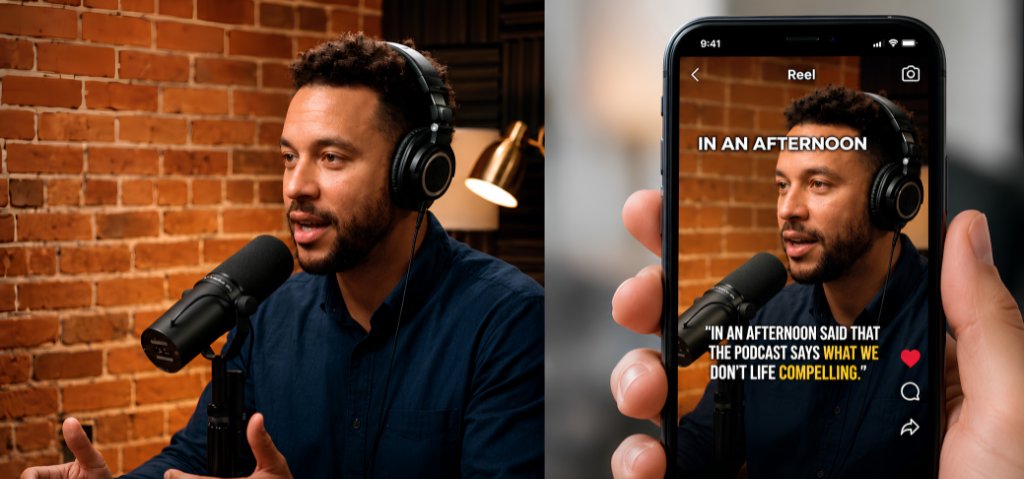
Start the clip 3–5 seconds before the quote for a running start, and end within 10 seconds after — resist the urge to 'finish the thought'. Put the quote itself on screen as an emphasized caption card while it's spoken. That on-screen sentence is your hook, your caption, and your shareability in one.
Ship while it's warm
The whole point of the afternoon constraint: extraction, captioning, and scheduling happen in one sitting, while your judgment about the episode is fresh. With auto-clipping surfacing candidates and captions generated in your language, the honest time budget is: 30 minutes reviewing candidates, 30 minutes polishing the top ten, 15 minutes scheduling the week. Afternoon over.
Prepping the episode for better quotes
The afternoon gets easier if the recording session feeds it deliberately. Three habits pay off immediately: ask guests to restate their best point 'in one sentence' whenever a segment lands (you're literally recording the pull-quote), timestamp strong moments live with a one-tap note, and end every episode with a rapid-fire section — short questions produce short, quotable answers by construction.
Captioning quotes for maximum share-ability
- The pull-quote gets its own visual treatment — larger type or an emphasis color — while surrounding speech stays in the standard caption style.
- Keep the quote on screen a beat longer than it's spoken; screenshots are shares, and people screenshot the quote card.
- Attribute on screen for guest quotes ('— Guest Name'). Guests re-share clips that credit them, and their audience is your cheapest distribution.
What to do with the other 15 candidates
You polished ten clips; the remaining marked moments aren't waste. Bank them in a backlog folder tagged by theme. In eight weeks you'll have a hundred banked moments — that's a compilation episode, a 'best of the season' Short series, and an emergency queue for the week you can't record. The pull-quote method's real output isn't this week's clips; it's a compounding library of proven moments.
Measuring what the clips do for the show
Clips are marketing for the long-form, so measure them that way: track episode plays in the 48 hours after each clip wave, and watch which clip topics drive follows versus mere views. A clip with modest views but a high follow-through rate found you *listeners* — weight the next episode toward that topic. The feedback loop from clip data back into episode planning is where podcasts quietly double their growth rate.
Frequently asked questions
How many clips can a podcast episode produce?
A 2-hour episode typically yields 20–30 pull-quote candidates; expect around 10 polished clips after review.
What makes a good pull-quote clip?
The sentence makes sense with zero context, makes a claim someone could disagree with, and is something a stranger would repeat. Two of three is a clip; three of three is your pinned post.
How long should a podcast clip run?
Start 3–5 seconds before the quote for a running start and end within 10 seconds after it. Resist finishing the whole thought — the quote is the clip.